
Tidradio: How to Choose a Two-Way Radio
Tidradio two-way radio guide: compare PoC, GMRS and ham handhelds, learn practical selection steps to match range and features. Visit Tidradio to explore.

Maya Collins
August 8, 2026 · 7 min read
On this page
Quick summary
Tidradio two-way radio guide: compare PoC, GMRS and ham handhelds, learn practical selection steps to match range and features. Visit Tidradio to explore.
Quick Answer
Tidradio offers a range of two-way radios—PoC (LTE), GMRS/ham handhelds, and license-free FRS/PMR models. For most buyers, choose PoC models for network-backed nationwide coverage and GMRS/ham radios when you need powerful, off-network range. This guide helps hobbyists, teams, and outdoor users decide.
Key Takeaways
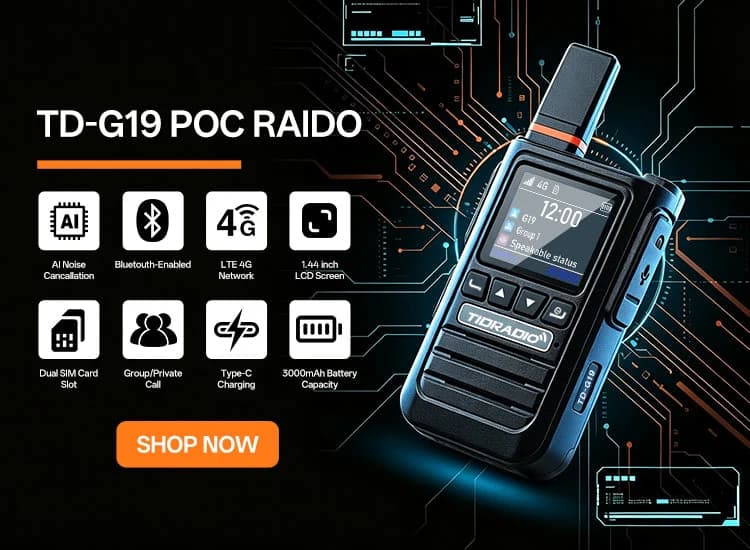
- Product variety: Tidradio lists PoC radios (TD-G19, TD-M15, TD-G18), ham/GMRS handhelds (TD-H9, TD-H8, TD-H3), and accessories on its official site.
- PoC vs radio bands: PoC (LTE) radios rely on cellular networks; GMRS/ham use radio frequencies and may require licenses depending on region.
- Decision criteria: Pick by coverage needs, license constraints, battery/runtime, and accessory compatibility (e.g., antennas, mics).
- Setup steps: basic setup is powering, SIM/activation for PoC, channel/programming for GMRS/ham, and pairing Bluetooth accessories.
- Where to buy: the Tidradio official website lists models, accessories, and support details.
What Does Tidradio Offer?
Tidradio sells a broad catalog of two-way radios and accessories covering PoC (Push-to-Talk over Cellular), ham/GMRS handhelds, DMR and license-free models. The site lists product families like TD-H9, TD-H8, TD-H3, TD-G19, TD-M15 and related accessories.
On the official store you’ll find PoC radios that emphasize global LTE PTT capability (e.g., TD-G19, TD-M15), higher-power ham/GMRS handsets (TD-H9, TD-H8), compact 2W models (TD-M11 Plus), antennas, Bluetooth adapters, and programming cables. For full model specs and supported features, explore the Tidradio collection.

Which Tidradio Model Fits My Use Case?
Choose a Tidradio model based on where you'll use it: PoC for cellular-backed, wide-area PTT; GMRS/ham for local long-range without carrier dependence; FRS/PMR for short-range, license-free use. Match the radio family to your environment and operational needs.
Consider who will use the radios (a family, a vehicle fleet, an amateur radio operator, or event staff), how important nationwide reach is, and whether you can obtain necessary licenses for GMRS or ham bands in your country. The site’s product pages list variant options to check band support.
- Define your coverage need: local short-range, regional long-range, or nationwide via cellular.
- Check legal/licensing requirements in your country for GMRS/ham use before choosing those bands.
- Decide on power level and portability: handheld 2–10W models vs desktop or mobile units.
- Look for necessary accessories (antennas, programming cable, Bluetooth mics) that match the chosen model.
- Confirm support and warranty policies on the official Tidradio pages before purchase.
How Do PoC (LTE) Radios Compare to GMRS/Ham/FRS for Real Use?
PoC radios use cellular networks to deliver push-to-talk across wide areas and are typically chosen for teams needing instant, nationwide coordination. GMRS and ham radios operate on radio frequencies and are often preferred when you need off-network communication or hobbyist features like APRS/GPS.
Below is a practical comparison table focused on decision criteria—coverage dependency, licensing, best use case, and common trade-offs. This is not a spec sheet; check model pages for exact technical specs.
| Criterion | PoC (LTE) Radios | GMRS / Ham Radios | FRS / PMR (License‑free) |
|---|---|---|---|
| Coverage dependency | Depends on cellular network availability and SIM/service | Independent of cellular networks; dependent on RF propagation and power | Short-range, line-of-sight; no network needed |
| Licensing | No radio license required, but may require service activation | May require amateur or GMRS license depending on region | Typically license-free for consumer use |
| Best for | Teams needing wide-area PTT, remote coordination | Off-grid comms, hobbyist features, high-power handhelds | Casual use, short-range safety, events |
| Trade-offs | Requires service; subject to carrier coverage and latency | Requires proper programming and possibly license; variable range | Limited range, simpler feature set, fewer channels |

How Should I Set Up and Use a Tidradio Device?
Basic setup depends on the radio type: power and pair Bluetooth for most handhelds, insert/activate SIM for PoC models, and program frequencies or channels for GMRS/ham units. Follow the product manual for exact steps and regulatory compliance.
General setup and safe use include charging the battery fully, reading the manual for local frequency rules, pairing optional accessories like the TD-Q2L mic or BL-2 Bluetooth adapter when applicable, and testing communications in your intended environment.
If you need firmware, drivers, or programming software, Tidradio lists downloads and manuals on its support pages; consult those resources for model-specific programming and upgrade steps. For product details and accessories, you can learn more about Tidradio products.

Is Tidradio a Reliable Place to Buy Two-Way Radios?
Tidradio is a direct brand/storefront that lists product families, accessories, and support resources; the official site provides product pages, firmware downloads, and stated guarantees. For final buying decisions, review the specific model pages and support terms on the site.
The Tidradio storefront highlights features like product bundles, support downloads (ODmaster, firmware), and accessory options. Before purchase, verify compatibility (band, power, licensing) and confirm shipping/return terms on the product page. Visit the Tidradio official website for authoritative product details, manuals, and service information.
Frequently Asked Questions
Do Tidradio PoC radios require a SIM or subscription?
PoC radios typically use cellular networks, so they need a SIM and active service for nationwide PTT. Exact activation steps, included service plans, and SIM details vary by model—check the Tidradio product page for the specific TD-G or TD-M series model to confirm activation requirements.
Can I use Tidradio GMRS/ham radios without a license?
Licensing requirements depend on the radio band and your country. Some handhelds support GMRS or ham bands that legally require a license; other models offer FRS/PMR modes that are license-free. Verify local regulations and the model’s supported bands on the official Tidradio product page.
What accessories should I plan to buy with a new Tidradio handheld?
Common accessories include spare batteries, desktop chargers, external antennas for improved range, programming cables (e.g., TD-CH340), and Bluetooth mics (e.g., TD-Q2L). Choose accessories that match the radio’s connector types and power specifications listed on the product pages.
How do I update firmware or program a Tidradio device?
Tidradio provides firmware, programming software, and manuals via its support/download pages. Use the recommended programming cable and follow the manufacturer instructions for firmware updates and channel programming. Always back up settings before applying firmware or configuration changes.
Where can I get support or replacement parts for Tidradio products?
Official support, manuals, and accessory listings are available on the Tidradio website, which also shows compatible antennas, mics, chargers, and batteries. For warranty or replacement inquiries, consult the product page and the store’s stated support or contact channels.
This article contains affiliate links; the publisher may earn a commission at no extra cost to you if you purchase via the linked Tidradio pages. All recommendations aim to help you compare models and choose what fits your communication needs.